Moving Towards "Zero Landfill"
Waste Blueprint for Hong Kong 2035
The Government announced the "Waste Blueprint for Hong Kong 2035" (the Blueprint) in February 2021. Setting out the vision of "Waste Reduction ‧ Resources Circulation ‧ Zero Landfill", the Blueprint outlines the goals and measures to tackle the challenge of waste management up to 2035. It also sets out a long-term target to move away from the reliance on landfills for direct disposal of Municipal Solid Waste (MSW) by around 2035. The Government's strategy has two main directions. The first is to mobilise the entire community to practise waste reduction and waste separation for recycling in the upstream to reduce the overall waste disposal amount. The second is to proactively drive the development of downstream waste-to-energy (WtE) facilities for sustainable disposal of the remaining MSW.
Future Directions and Measures for Waste Management
To achieve "zero landfill" in a timely manner and continuously promote waste reduction at source, we will take forward waste reduction and recycling work along four directions – strengthening public education, enhancing recycling network, strengthening collaboration with industries, and utilising market forces to develop environmental infrastructure, in conjunction with the development of the WtE facilities I · PARK1 and the planned I · PARK2 to also reduce carbon emissions. MSW charging serves as a reserve tool. Should waste reduction and recycling yield results with sufficient public participation in the future, its implementation may not be required. The Government will continuously monitor the effectiveness of various waste reduction and recycling measures as well as the level of public support and participation in waste reduction and recycling, to assist in evaluating whether there is a need and conditions to conduct a trial on MSW charging in future.
By implementing initiatives across four directions, we will cultivate a healthy green living culture within different spheres including households, schools, community and the trades. We invite you to explore this website to learn more about our waste management initiatives and to join us in advancing Hong Kong's sustainable development.
| (1) Strengthen public publicity and education to change public behaviour and cultivate a green living culture | (2) Continue to enhance recycling network | ||
|---|---|---|---|
|
|
||
We-recycle@School |

Green Outreach and Green Outreach Volunteer Programme |

GREEN@COMMUNITY |

Food Waste Recycling |
| (3) Strengthen collaboration with industries to explore and take forward practical environmental protection measures, while minimising the impact on the business sector (especially SMEs) | (4) Utilise market forces to develop environmental infrastructure and assist in the transition to a green economy | ||
|---|---|---|---|
|
|
||

WEEE @ HK |

Packaging Reduction Charter |

EV Battery Recycling Facility (Commenced operations in late June 2026) |
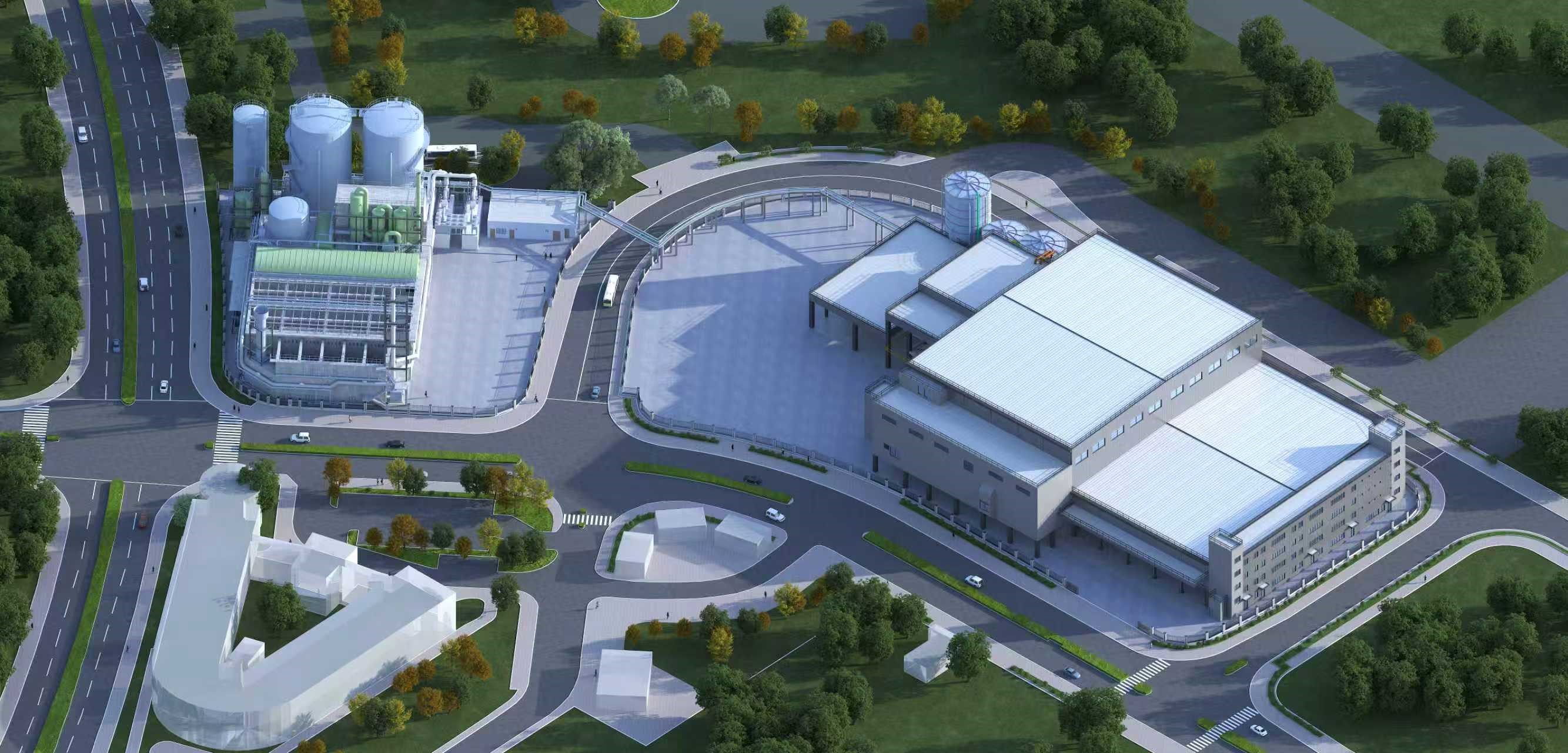
Tuen Mun EcoPark's Modern Paper Pulping Facility (Began trial operation at the end of 2025) |
Municipal Solid Waste (MSW) Disposal Quantities
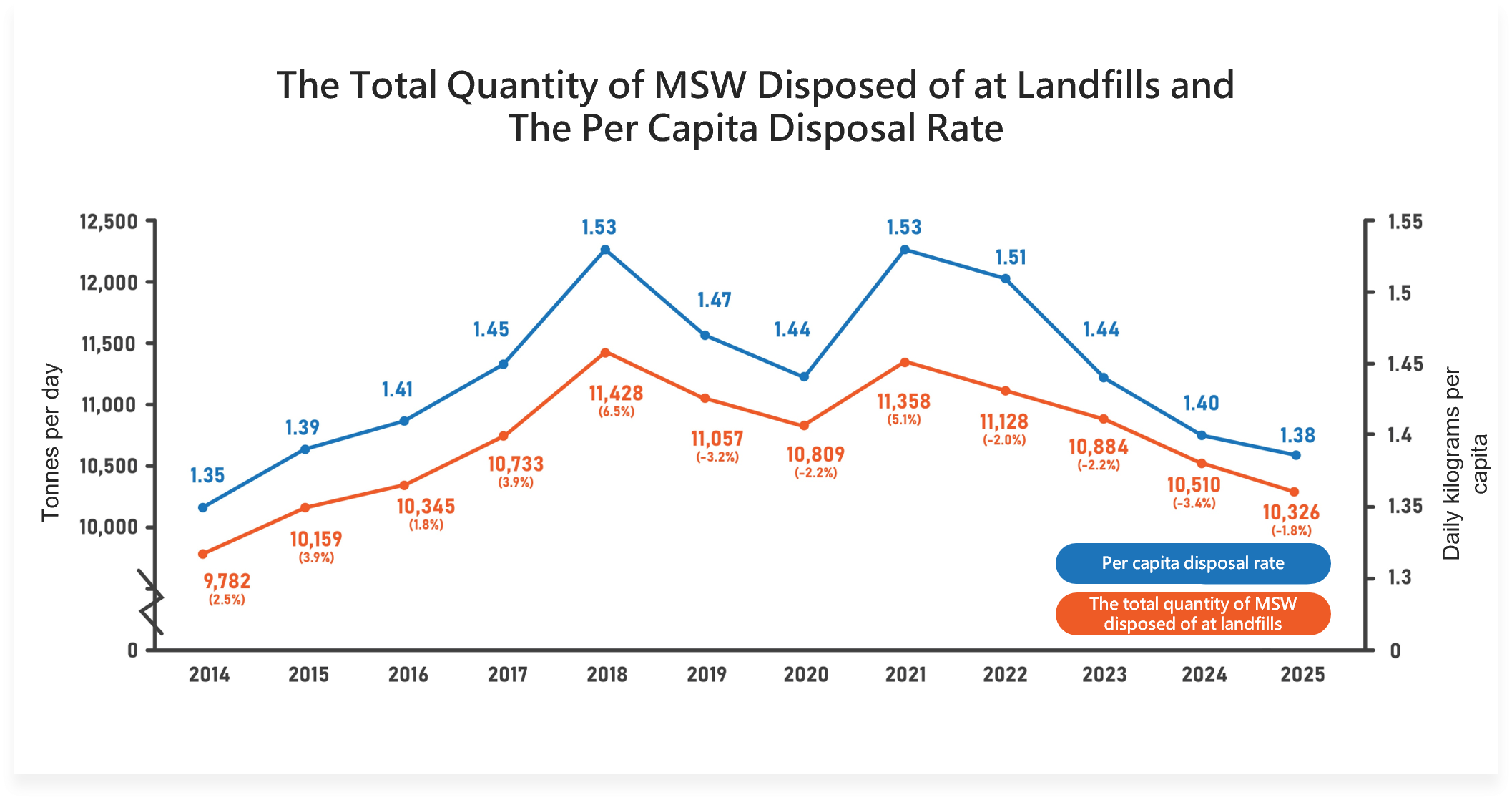
The current-term Government has successfully reversed the long-term upward trend in waste disposal quantities. The average daily disposal of MSW has continuously declined over the past four years since 2021, from an average of 11 358 tonnes per day in 2021 to 10 326 tonnes per day in 2025, a total reduction of 9.1%. The per capita disposal rate has also dropped from a peak of 1.53 kilograms per person per day in 2021 to 1.38 kilograms per person per day in 2025, a decrease of about 10% over four years.
Municipal Solid Waste (MSW) Recovery Rate
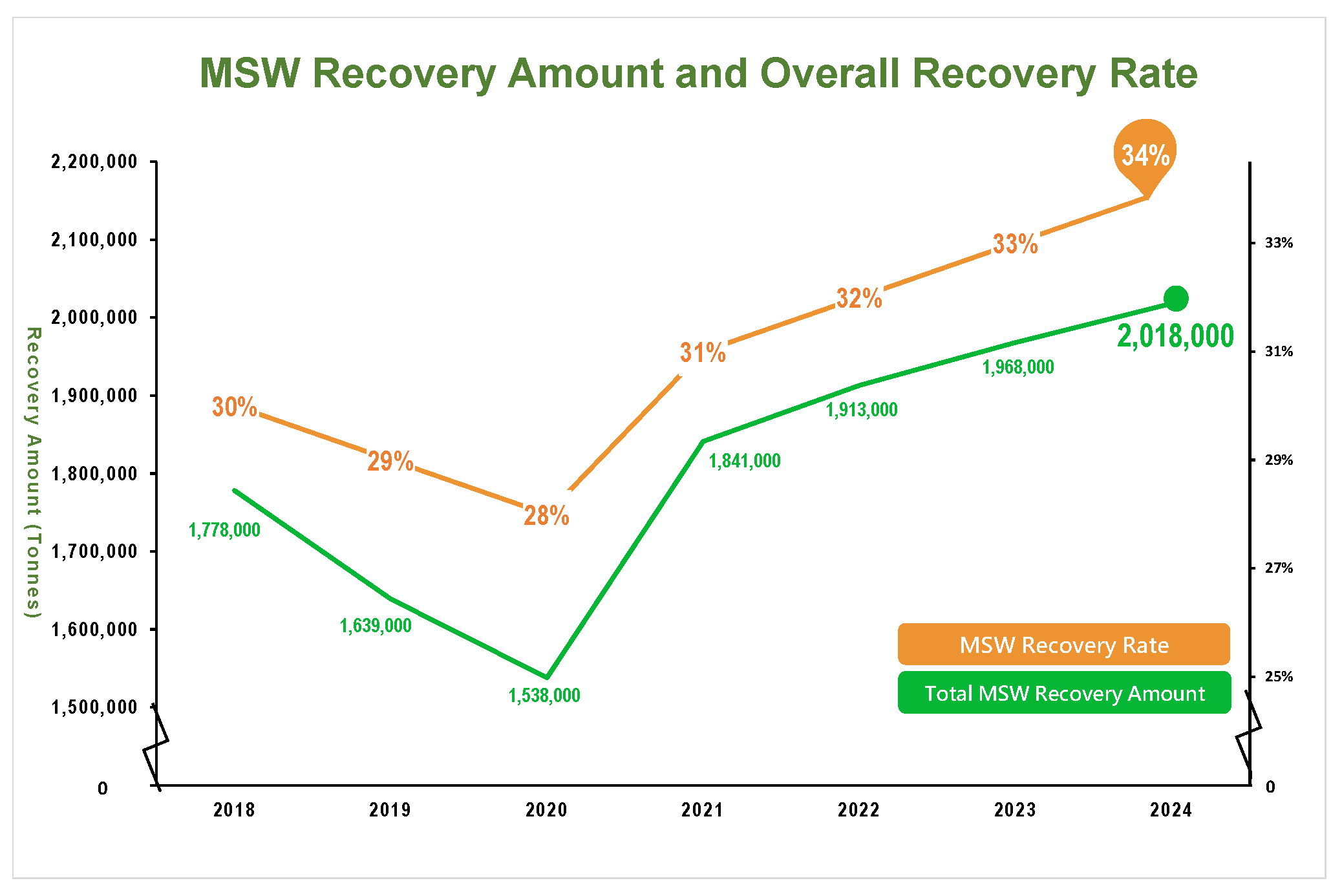
The achievements of the current-term Government in promoting waste reduction and recycling are not only reflected in the decrease in the per capita MSW disposal rate, but also the rise in the overall MSW recovery rate. The total recovery amount climbed from the low point of approximately 1.54 million tonnes in 2020 to around 2.02 million tonnes in 2024, marking an increase of about 480 000 tonnes. The recovery rate also rose from 28% to 34%.